How Chicken Boy went from juggling paper receipts in the wind to a kiosk-and-KDS workflow that even their teenage daughters can run — and why the transition convinced a skeptical sister-in-law.
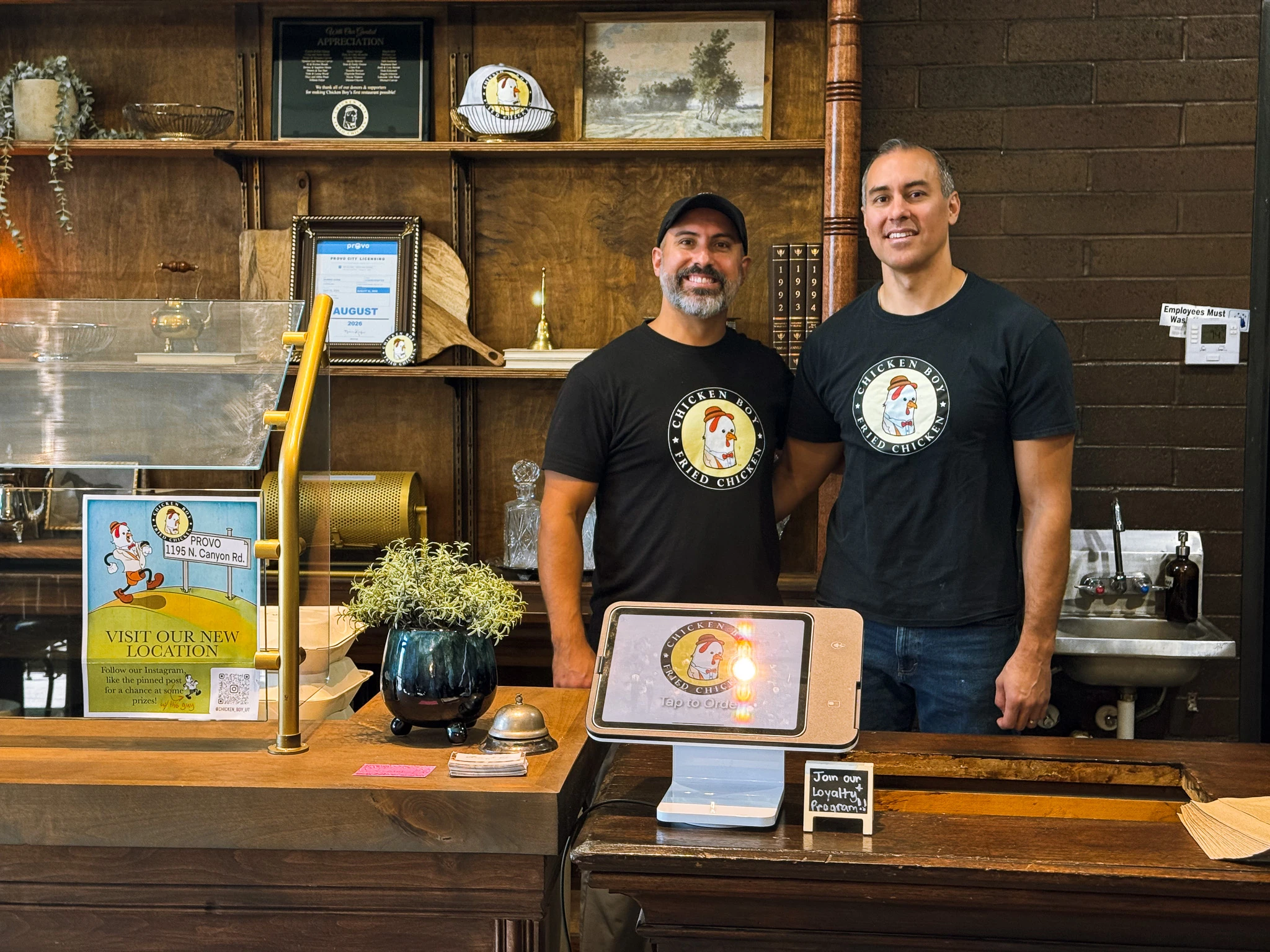
Johnny is a software engineer by day and a serious home cook by night — a self-described foodie who spent years perfecting his fried chicken recipe at home. When his daughter was diagnosed with celiac disease nine years ago, the entire family's recipes had to change. Johnny rebuilt his fried chicken from scratch to be gluten-free, determined to make it as good as — or better than — anything with gluten.
Friends and family kept telling him he should sell it. He resisted, until his brother Jared (finishing a business degree, just back from an internship in Texas) made the pitch: let me run with this. Two weeks before a local gluten-free expo, with a brand-new business license and no menu yet, they printed shirts, hauled in two countertop fryers from Walmart, and showed up.
They sold roughly 8,000 nuggets that weekend, ran out every day, and gained 1,300 Instagram followers in a week. Customers were crying. Strangers were asking to franchise the brand in other states before they even owned a trailer. The food trailer came next. They ran it for seven months.
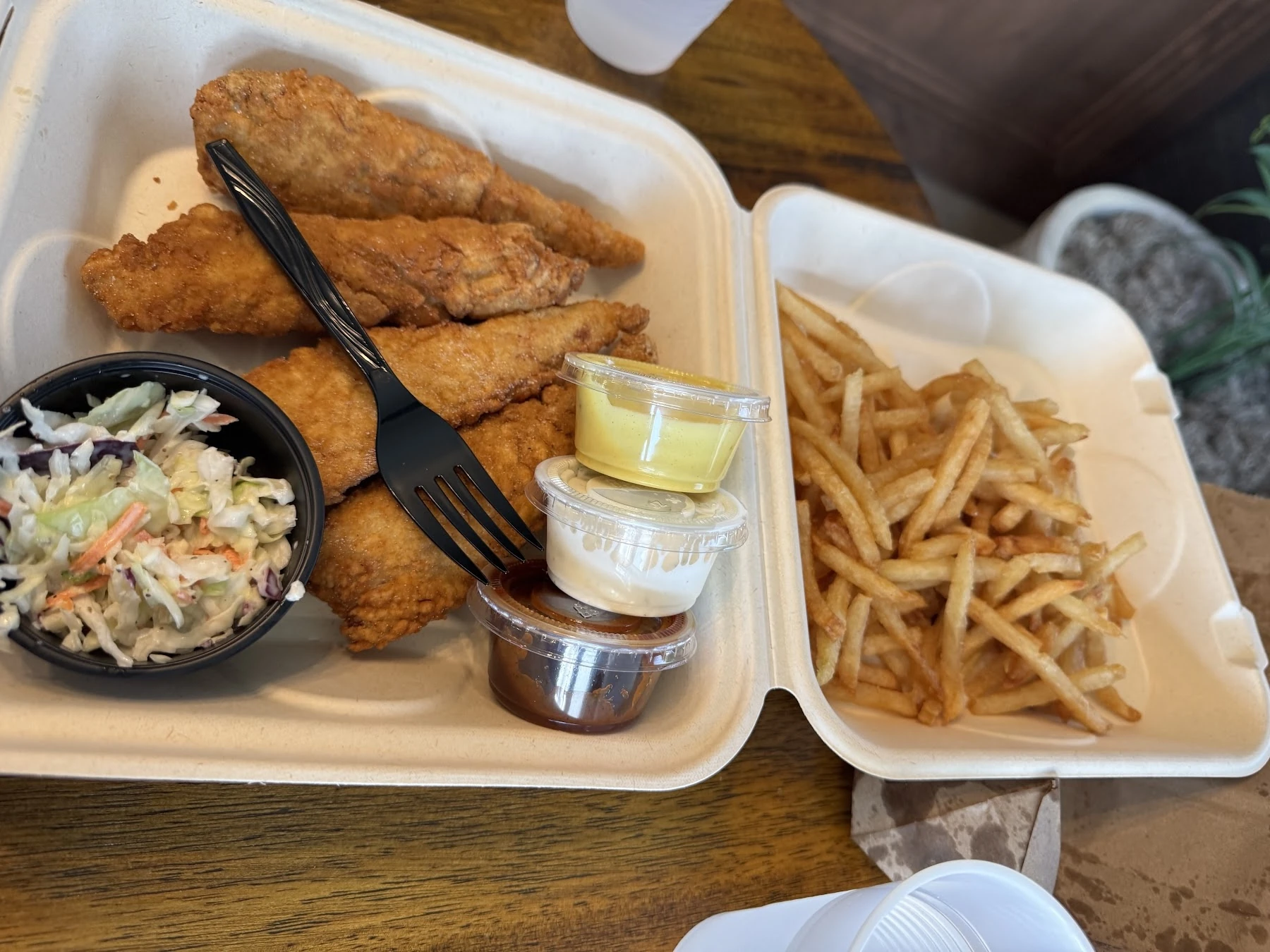
Trailer days were hectic. Wait times stretched to three hours at busy events — Jared spent shifts handing out water and stickers to keep people happy in line. The bottleneck wasn't just the small fryers. It was the entire order flow.
The trailer ran on a basic kiosk system that printed paper receipts: one for the customer, one to clip into a small holder behind the line. The holder fit nine or ten receipts at a time. Past that, orders started piling up on counters, blowing away in the wind, or coming out of the printer crinkled and unreadable — forcing reprints in the middle of a rush.
"It worked for what we needed, but it was very cumbersome — changing receipts out a lot, the wind blowing them off, having to reprint when they came out crinkled. We were doing the best we could in that tiny trailer."
By the time Chicken Boy outgrew the trailer, the brothers knew exactly what they didn't want to repeat: a paper-based order system that fell apart the moment volume picked up.
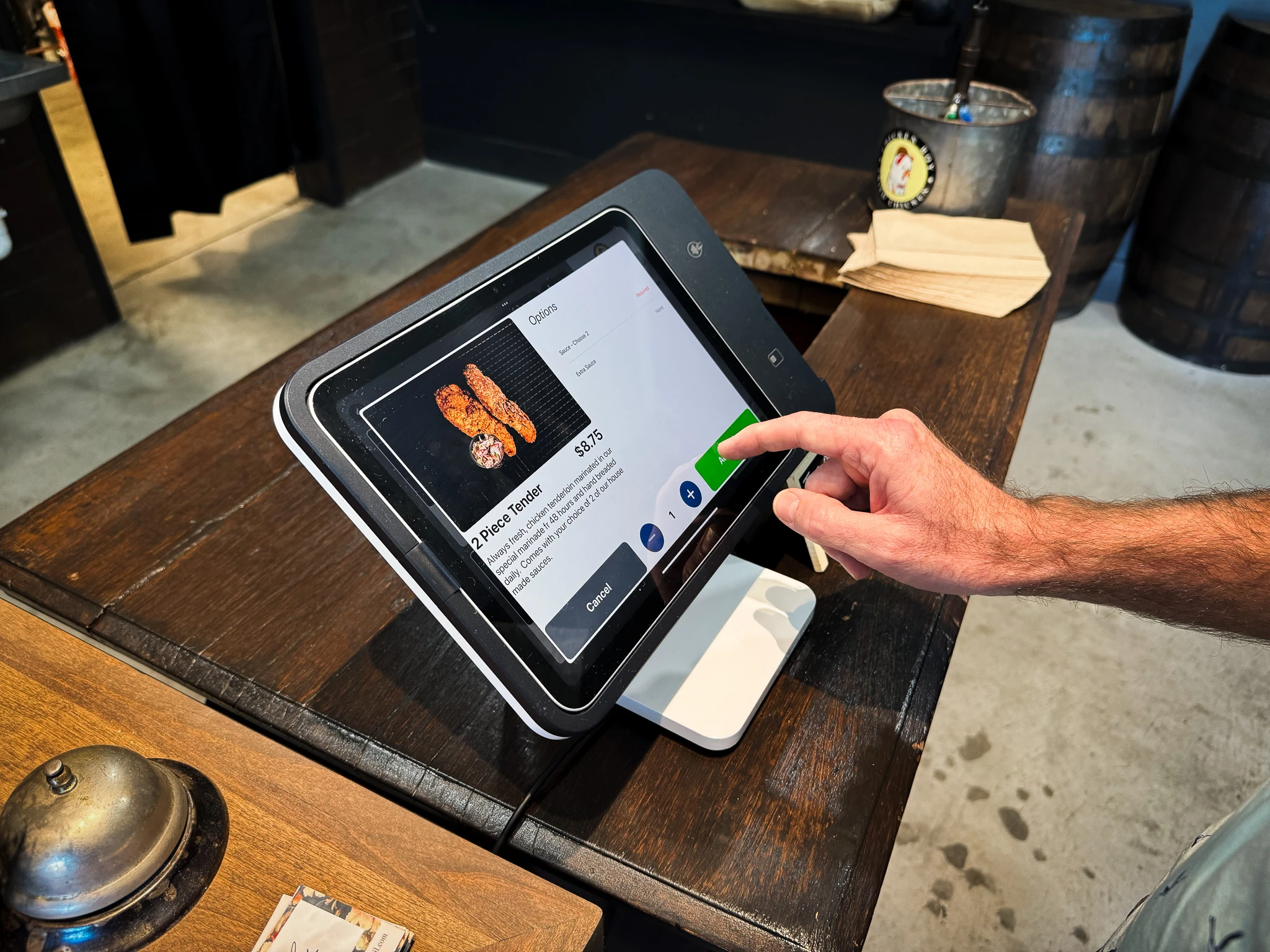
Chicken Boy now runs entirely on Flash Order's Kiosk and Kitchen Display System, with full Square integration for payments and tipping. Customers walk in, place their own orders at the kiosk, and the order flows directly to the KDS in the kitchen — no verbal relay, no handwritten tickets, no paper at all.
The setup matters most for one specific reason food truck operators will recognize: there is no dedicated order-taker on payroll. A single front-of-house staffer handles greeting, walkthroughs for first-time customers, and prep work like sauces — all from one position. The kiosk does the order-taking job that used to require a separate person leaning out the trailer window.
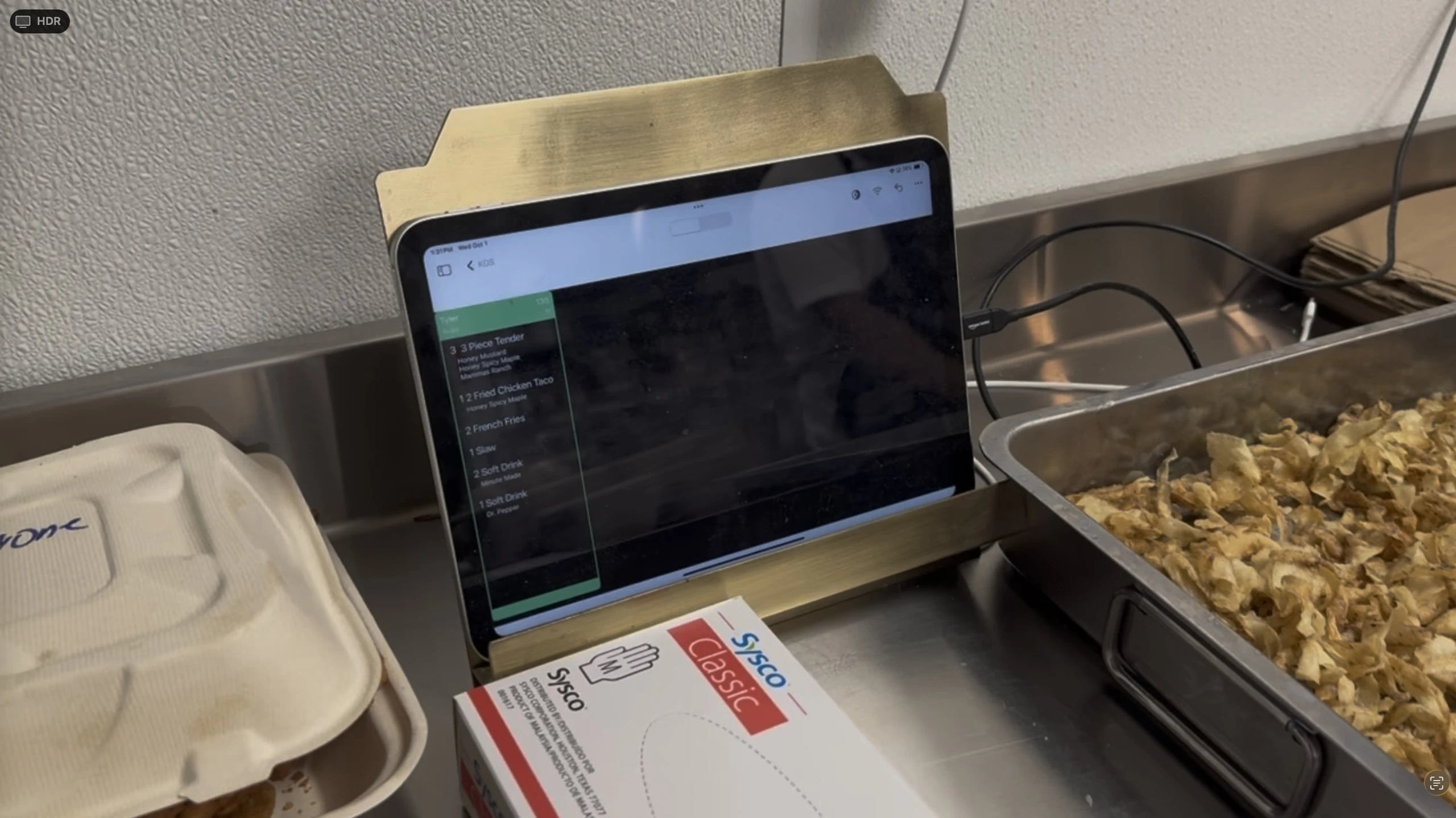
The drink station — set up across the room from the kitchen — operates entirely off the KDS with zero verbal communication. Drink orders pop up on the screen, the drink-station staffer fulfills them, marks them complete, and walks them to the customer's table. Jared's 12- and 14-year-old daughters work the drink station on weekends with essentially no training.
"I thought we were going to need walkie-talkies just to keep the orders flowing between stations. But the drinks just pop up on the KDS, the person fills them, marks it complete, and walks it out. It's been seamless."
When his sister-in-law heard they were going self-serve, she pushed back hard — worried they'd lose the personal connection that made the trailer special. The brothers' answer was that the connection wasn't tied to who took the order. It was tied to who was on the floor. Staff still greet every customer, walk first-timers through the kiosk, and check on tables. The kiosk replaced the order-taker, not the hospitality.
"After she came in and saw how it works, she had no issue. The personal nature is still there. We just save on money and resources by not having someone whose entire job is taking orders."
The Square-integrated tipping flow on the kiosk eliminated the most awkward moment of trailer life: spinning a tablet around and pretending to do something else while a customer chose a tip percentage. Customers now tip privately at the kiosk, and the brothers have seen tip rates increase — including one customer who manually dialed in a 50% tip using the custom-amount option.
Tips flow back to staff through the Square integration automatically, calculated proportionally to hours worked, so longer shifts get a larger share without any manual math.
"In the trailer, I'd turn the tablet around and try to look like I was filling a sauce or something. I knew exactly who tipped well and who didn't. Now I have no idea — and that's the point. It's not awkward anymore."
User error has been minimal. Even older customers who Jared expected might struggle with self-serve have figured it out quickly thanks to the photo-driven menu. Returning customers walk straight to the kiosk and order without help. When someone does need a hand, staff is already there walking the floor.
Chicken Boy still does pop-ups and events alongside their restaurant operation, and they see the kiosk-plus-KDS workflow as the model any food truck should be running — especially trucks battling the exact problems they had in their early days: paper receipts, three-hour lines, and one-or-two-person crews trying to do four jobs at once.
The brothers are also exploring post-purchase customer surveys delivered via push notification (the same channel that already sends order-ready alerts) — a way to capture feedback like "the food was great, but the water glasses sat empty too long" that face-to-face service rarely surfaces honestly.
"For food trucks, this is the answer. The little kiosk system we had in the trailer worked, but it was constantly changing receipts, wind blowing them off, reprints. With Flash Order, the orders just go straight to the kitchen. No paper. No chaos."
See how Flash Order can simplify your operation — in under 5 minutes.